Bitcoin and life insurance: what insurers actually ask, and what they don't cover
Insurers are starting to ask about crypto on applications. A payout gives your family cash — it does nothing to hand them the bitcoin itself.
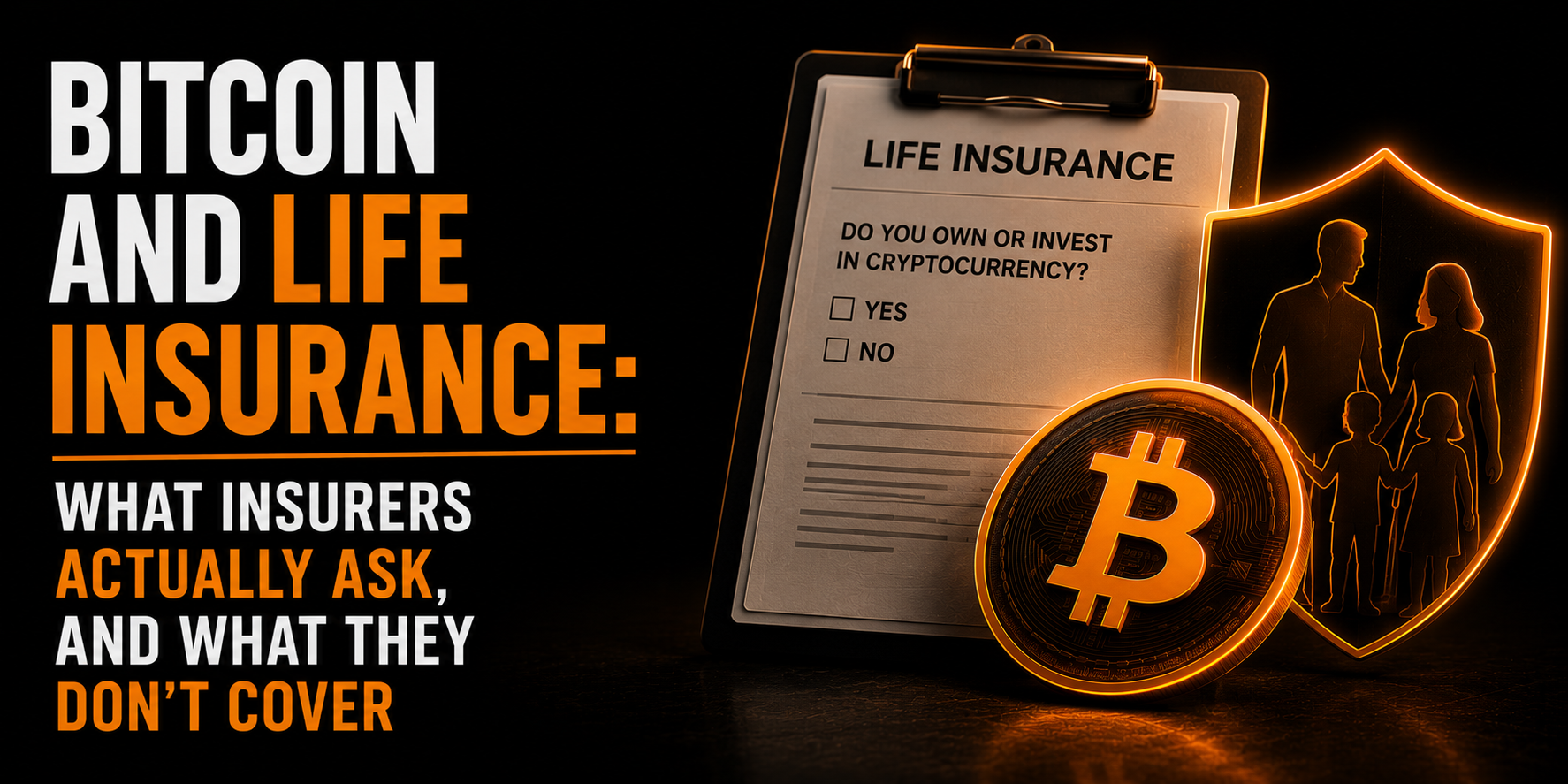
Why insurers started asking about crypto at all
Life insurance underwriting is built around risk classification, and a growing number of carriers now include crypto-specific questions on applications — not because holding bitcoin itself is risky, but because certain related activities are. Running mining hardware raises fire and electrical-safety flags similar to other high-wattage home businesses. Day trading with leverage or working professionally in a volatile crypto role can factor into occupational or financial-risk questions the same way any other high-variance income source would. Simply owning bitcoin as a long-term holding, however, typically doesn't move the needle on premiums at all — insurers care about behavior and occupation, not portfolio composition.
What a payout does — and doesn't — solve
A life insurance death benefit delivers cash to a named beneficiary, quickly and outside probate in most cases. That's genuinely useful: it can cover estate taxes, provide liquidity while an estate is settled, or simply replace income. What it does not do is transfer access to bitcoin held in self-custody. The policy and the coins are two entirely separate assets with two entirely separate access mechanisms — a $500,000 payout doesn't help an heir who still can't find the seed phrase. Some families use life insurance specifically to cover an expected estate tax bill on a bitcoin-heavy estate, paying the tax in cash so heirs never have to sell coins to cover it — a legitimate and common planning technique, but a complement to bitcoin inheritance planning, not a substitute for it.
The emerging (and often confused) category: bitcoin-backed loans
A small but growing set of products let policyholders or bitcoin holders borrow against an asset without selling it. Permanent life insurance has long supported policy loans against accumulated cash value. Separately, a number of crypto-native lenders now let borrowers pledge bitcoin as collateral for a cash loan. These are related concepts — using an appreciating asset as loan collateral instead of selling it — but they are different products from different types of institutions, and true "bitcoin-backed life insurance" in the sense of a single integrated product remains rare and worth scrutinizing carefully for terms, liquidation risk, and regulatory status before using one. For the tax side of a bitcoin-heavy estate, see our state-by-state crypto inheritance tax guide.
WHY IT MATTERS
As bitcoin holdings grow large enough to matter for estate liquidity, life insurance is becoming a real planning tool alongside — never instead of — a proper key-access plan. Conflating the two is a common and costly mistake.
Frequently asked questions
Does owning bitcoin affect your life insurance application?
Simply holding bitcoin as an investment generally does not raise your premium. Insurers focus their crypto-related questions on riskier activity — running mining hardware, day trading with leverage, or working professionally in crypto in a way tied to occupational risk questions.
Can life insurance replace a bitcoin inheritance plan?
No. A life insurance payout gives heirs cash, but does nothing to transfer access to the bitcoin itself — the keys, seed phrase, or multisig setup still need a separate plan, or the coins remain inaccessible regardless of the payout.
What is a bitcoin-collateralized life insurance loan?
A small number of specialty insurers and lenders now let policyholders borrow against a permanent life insurance policy's cash value and, separately, some crypto lenders let borrowers pledge bitcoin as collateral for a loan — the two products are related concepts but not the same instrument, and true bitcoin-backed life insurance products remain rare.
SOURCES & DATA
Investopedia — life insurance and cryptocurrency disclosure requirements ↗
NAIC — state insurance regulatory guidance ↗
General education, not insurance, tax, or legal advice. Consult a licensed insurance professional and estate attorney for your situation. See our editorial process and corrections policy.

Rafael Ortiz, CPA
Retirement & Tax Reporter. Covers estate, tax, and insurance planning for bitcoin holders.